Surge Protection 101: Safeguarding Your Home & Business Electronics
Is your living room a jungle of glowing screens and humming gadgets? Does your business depend on servers, security cameras, or point-of-sale machines that can’t afford a hiccup? You’re not alone—and you’re right to be concerned.
The world relies on electronics more than ever. But hidden dangers, like sudden power surges, can fry your expensive tech in less than a blink. As a trusted emergency electrician for homes and businesses, Lee Davis Electric helps people recover every day. The good news? Most surge disasters are preventable.
What Causes Power Surges? ⚡
Imagine a lightning bolt racing down the street, slamming into a power line. That’s the classic surge story—but it’s not the only one. In reality, most power surges come from inside your own walls.
- Lightning strikes—rare but catastrophic. A direct hit can send a tidal wave of voltage through your wiring.
- Utility grid switching—when the power company reroutes electricity or restores power after an outage, the flow can spike.
- Large appliances cycling on and off—refrigerators, air conditioners, and industrial machines cause small, frequent surges.
- Wiring issues—damaged, outdated, or overloaded circuits can make your system unstable.
- Downed power lines or nearby construction—external events can trigger unexpected surges.
The National Electrical Code (NEC) and manufacturers like Siemens and Eaton highlight these risks in their guidelines. A surge doesn’t have to be dramatic to do damage—a little jolt, repeated over time, can wear down sensitive electronics until they fail.
Risks of Unprotected Electronics
Think of your electronics like a castle. Without a moat (surge protection), every storm, every mistake, every little flicker is a battering ram.
- Burnt circuit boards—one surge can silence your TV, computer, or smart fridge forever.
- Data loss—that work project, family photo, or business record? Gone in a flash.
- Fire risk—severe surges can actually melt wires or start electrical fires.
- Hidden damage—devices may keep running, but their lifespan shrinks, and mysterious glitches appear.
- Business interruptions—cash registers, alarm systems, and medical equipment can all be taken out by a single spike.
A single overlooked surge can cost thousands in repairs near you. For businesses, the real loss is often downtime—hours or days without critical equipment.
Types of Surge Protection: Plug-In vs. Whole Property
Not all surge protectors are created equal. It’s like comparing a bike helmet to a full suit of armor.
Plug-In Surge Protectors
- Looks like: Power strips with built-in protection you plug into the wall.
- Best for: Computers, TVs, gaming systems—anything you can move or unplug.
- Pros: Affordable, easy to install, protects individual devices.
- Cons: Only works for what’s plugged in. Leaves hardwired items (like lights, built-in appliances, or outlets) exposed.
Whole Property Surge Protectors
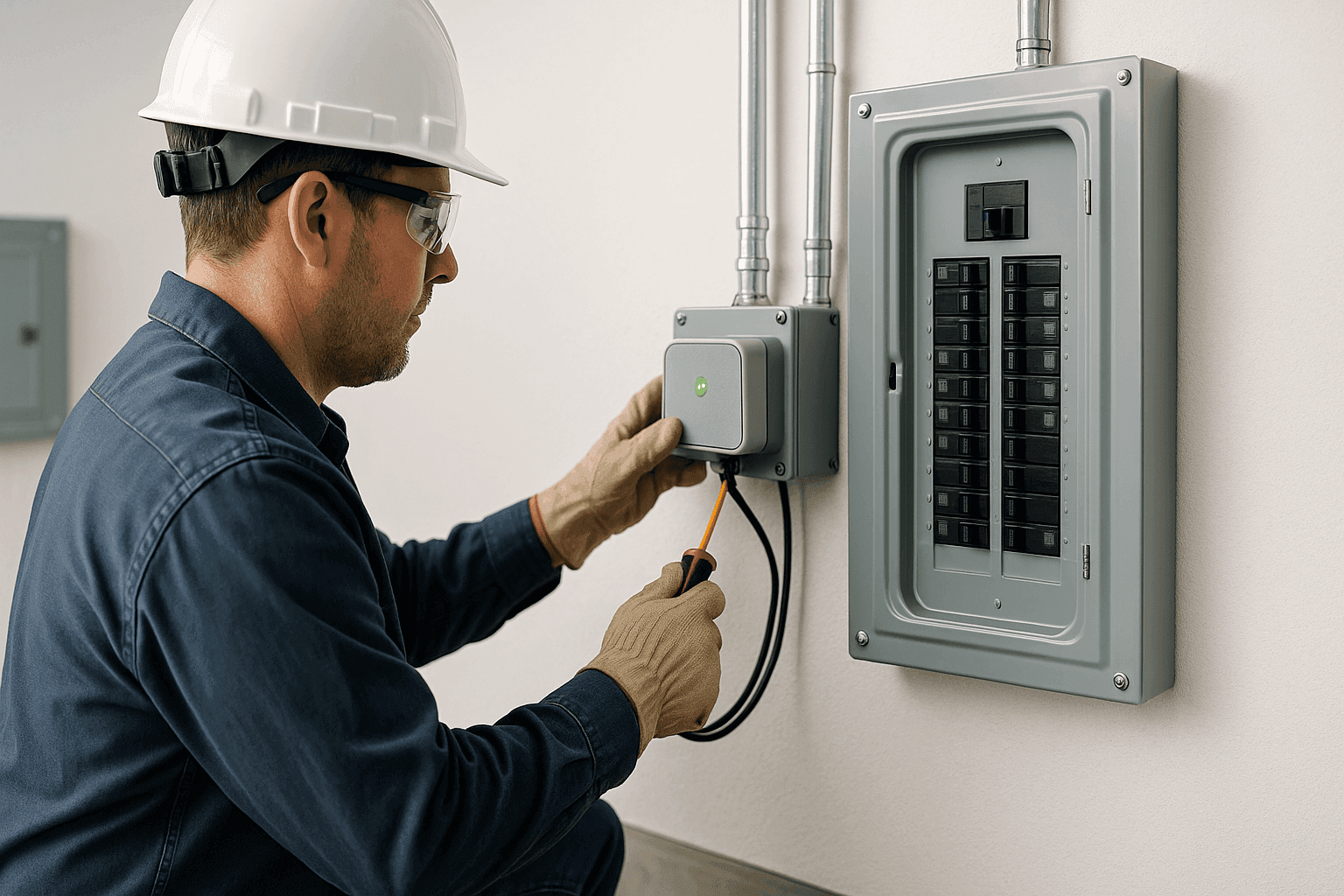
- Looks like: A device wired directly into your main panel by a licensed electrician.
- Best for: Complete protection—covers everything in the home or business, even what’s hardwired.
- Pros: Shields all circuits, even if you forget to use a plug-in strip. Required by code for new homes in many areas (per 2023 NEC updates).
- Cons: Must be installed by a professional. Higher upfront cost, but protects everything.
Combining both gives the best defense—a strong fence (whole property) and locked doors (plug-in) for your most precious gear.
How to Choose the Right Solution
Picking protection isn’t one-size-fits-all. Ask yourself:
- What’s at stake? Expensive or irreplaceable electronics? Business-critical systems?
- Do you own or rent? Whole-property units are best for owners. Renters can use high-quality plug-in strips and ask landlords about panel upgrades.
- How old is your wiring? Outdated panels or questionable circuits mean you need an inspection before adding surge protection.
- Does your area get frequent storms or outages? If yes, a whole-property protector is a wise investment.
- Are you compliant with local codes? Many states and cities now require surge protection in new construction or major renovations.
Look for units certified by UL 1449 or listed by Intertek (ETL mark). Manufacturers like Leviton, Square D, and Siemens publish guidelines on matching the protector’s rating (joules, response time, clamping voltage) to your needs.
Seasonal Surge Risks (Storms, Outages, and More) 🌩️
Nature has its own way of keeping you on your toes.
- Thunderstorm season: Lightning is the villain everyone knows. Whole-property protection is your shield.
- Hurricane or tornado season: Downed lines and power restoration efforts can trigger massive surges.
- Winter storms: Ice and wind can knock out power, leading to dangerous spikes when service resumes.
- High-demand days: Heat waves or cold snaps can strain the grid and lead to utility switching.
- Construction booms: New development in your neighborhood? Equipment and grid work can create local surges.
Plan ahead. Don’t wait for the next big storm—assess your protection now.
Practical Tips for Homes and Businesses
- Replace old power strips—they wear out. Most only last 3–5 years.
- Check for visible wear or scorch marks on outlets and strips. These are red flags.
- Label your critical gear—know which devices must stay safe.
- Ask for a professional inspection—especially if your building is over 20 years old or you’re seeing flickering lights.
- Test your whole-property protector—some units have indicator lights or require periodic checks per manufacturer instructions.
- Keep receipts and manuals—some surge protectors offer limited device coverage if properly registered.
Common Mistakes and Signs of Inadequate Protection
- Plugging in too much—overloading strips or daisy-chaining them can defeat their purpose.
- Ignoring main panel protection—if you only use plug-in strips, major appliances and built-in systems stay vulnerable.
- Not maintaining protection—many don’t realize surge protectors wear out over time.
- Assuming your circuit breakers protect against surges—they don’t, unless they have built-in surge modules.
- No regular safety inspections—outdated wiring is more likely to fail, leaving you exposed.
If you notice frequent equipment glitches, unexplained outages, or scorched outlets, your protection may be failing.
Assessing Your Current Protection: Quick Safety Checklist
- Do you use UL-listed surge protectors for all computers and electronics?
- Is there a whole-property surge device installed at your main panel?
- Are your strips and panel protectors less than five years old?
- Have you had an electrical safety inspection in the last two years?
- Do you unplug sensitive gear during storms or outages?
- Is your wiring free of visible damage or corrosion?
If you answered “no” to any of these, it’s time to take action.
Why Call an Emergency Electrician?
Some problems just can’t wait. Surge damage can leave you in the dark—or worse.
- Burning smell or visible sparks
- Equipment not powering on after a storm
- Breaker won’t reset or keeps tripping
- Outlets are hot, buzzing, or scorched
These are signs of immediate risk. Don’t try to fix it yourself. Call an emergency electrician for safe, fast repairs near you.
What Lee Davis Electric Does On Arrival
When you call Lee Davis Electric, here’s what you can expect:
- We assess your entire electrical system for hidden damage.
- Check the main panel, outlets, and all surge protection devices.
- Test affected appliances and equipment for safety.
- Replace failed or outdated protectors with code-compliant models.
- Provide recommendations based on NEC guidelines and manufacturer standards.
- Ensure everything meets local safety codes before leaving.
Our licensed electricians treat your home or business with the care it deserves, day or night.
Prevention & Maintenance
A little planning can save a lot of headaches.
- Schedule regular electrical safety inspections—especially before storm seasons.
- Update panel and surge protection every 5–7 years.
- Replace damaged outlets or wiring immediately.
- Use only UL-listed, code-compliant devices.
- Keep outdoor electronics and pool equipment on GFCI-protected circuits with surge protection.
Costs & Time Factors
Surge protection is an investment—but not just in electronics. In peace of mind.
- Plug-in strips: $20–$100 each. Easy DIY.
- Whole-property surge units: Typically a few hundred dollars, plus installation by a licensed electrician.
- Inspection/installation time: Usually 1–2 hours for most homes and small businesses. Larger or complex properties may take longer.
Remember, the cost to replace a single computer or appliance often exceeds the price of solid protection.
When It’s an Emergency
- Call 911 if you see fire or someone is injured.
- For all other electrical emergencies—smoke, sparks, repeated breaker trips—call an emergency electrician right away.
- Never handle damaged wires, outlets, or panels yourself.
FAQ: Surge Protection Essentials
How often should surge protectors be replaced?
Most need replacement every 3–5 years, or sooner if they show wear.
Can I install a whole-house surge protector myself?
No. These must be installed by a licensed electrician per NEC and manufacturer requirements.
Do surge protectors work for lightning?
They reduce risk, but nothing can guarantee full protection from a direct strike. Unplugging devices during severe storms is the safest move.
Will my insurance cover surge damage?
Some policies do, but many require proof of protection or regular maintenance—check with your agent.
Local & Seasonal Considerations 🏠
Whether you live in the city or the country, seasonal risks change. If your area sees frequent storms, outages, or new construction, review your protection every year.
- Spring/summer: Prepare for storms and grid maintenance.
- Fall/winter: Watch for ice, wind, and holiday power demands.
- Near industrial or commercial zones: Surges from heavy equipment are more common.
National Fire Protection Association (NFPA) and NEC both recommend annual safety reviews—especially if you’ve added new electronics or appliances.
Protect what matters most. Don’t wait for the next surge to find out your defenses are down.
Call Lee Davis Electric now — or reach us anytime at 877-757-7920 .